A Historical Analogy: The Flat-Earth Assumption and the Dysautonomia Model
- Natural Healing
- August 20, 2026
- No Comment
- 4 minutes read
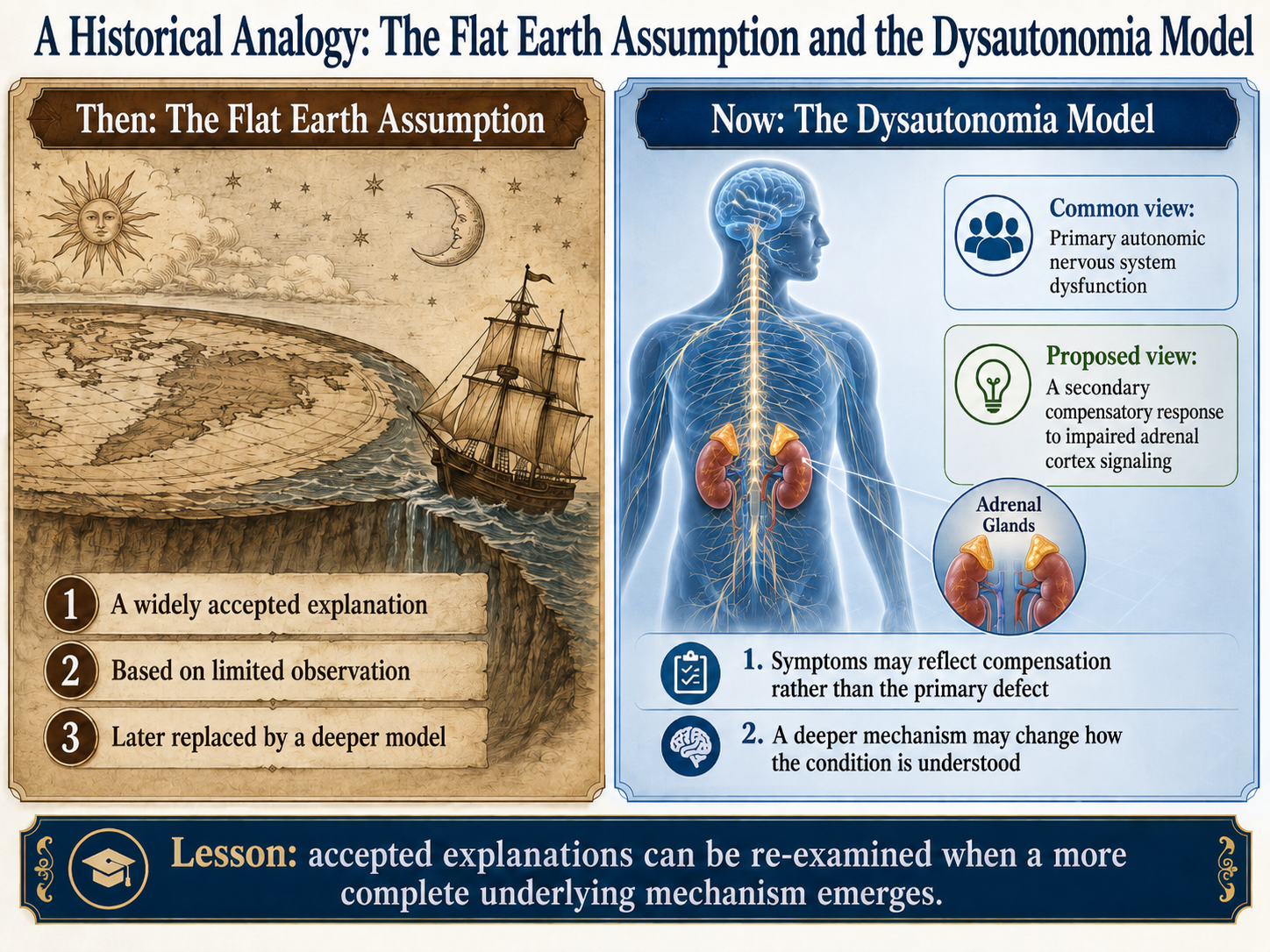
At one time, certain assumptions about the natural world were accepted because they seemed to fit ordinary observation. To the unaided eye, the Earth appears flat. The ground feels stable. The horizon looks level. Based on surface-level perception, the flat-earth view seemed reasonable to some people.
However, as better observations developed—the movement of ships over the horizon, the curved shadow of the Earth during lunar eclipses, and later astronomical evidence—it became clear that the original interpretation was incomplete. The Earth had not changed; the framework used to explain it had changed.
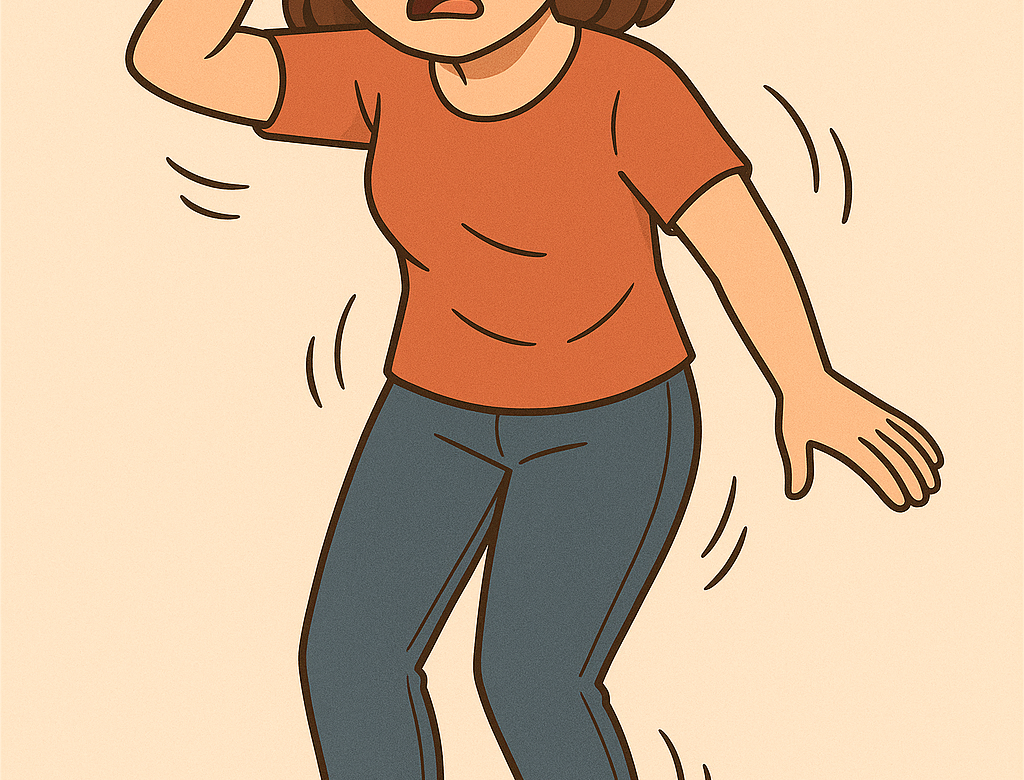
A similar issue may exist in the way dysautonomia is commonly understood today. The symptoms clearly involve the autonomic nervous system: rapid heart rate, blood-pressure instability, dizziness, poor temperature regulation, tremors, sweating abnormalities, fatigue, and orthostatic intolerance. Because these symptoms appear through autonomic pathways, the condition is often described as a primary disorder or failure of the autonomic nervous system.
But another possibility is that the autonomic nervous system may not always be the original source of the problem. In some cases, it may be responding appropriately to a deeper physiological signaling deficit. If adrenal cortical signaling is inadequate—especially if corticosteroid support is insufficient—the body may lose an important hormonal “buffer” that normally helps regulate stress response, vascular tone, inflammation, blood volume, and sympathetic activation.
From this perspective, the autonomic nervous system is not necessarily “failing.” It may be compensating.
Just as the flat-earth interpretation came from observing the surface appearance of the world, the primary-neurological-failure model of dysautonomia may come from observing the surface expression of the illness: autonomic symptoms. But symptoms are not always the same as root cause. Tachycardia, vasoconstriction, blood pooling, tremors, and orthostatic intolerance may represent the body’s attempt to maintain circulation and survival in the presence of inadequate adrenal signaling.
In other words, the autonomic nervous system may be the messenger, not the originator.
The older model says:
“The autonomic nervous system is malfunctioning.”
The alternative model asks:
“What is forcing the autonomic nervous system into this chronic compensatory state?”
That distinction is important. If dysautonomia is viewed only as a primary neurological failure, treatment may focus mainly on controlling autonomic symptoms. But if the condition is secondary to a primary adrenal cortical signaling deficit, then the deeper question becomes whether the body lacks sufficient hormonal support to regulate blood pressure, vascular tone, stress response, and energy production.
The lesson from history is not that every accepted medical model is wrong. Rather, it is that accepted models should remain open to revision when they do not fully explain the patient’s symptoms. What appears to be primary autonomic failure may, in some cases, be a secondary adaptive response to a deeper endocrine signaling problem.
John J. Herbert, DC
Author of The Hidden Epidemic
For more information on this subject, read The Hidden Epidemic: Subclinical Adrenal Insufficiency and the Fatigue Syndromes—Uncovering the Root Cause of Fatigue, POTS, and Dysautonomia, by John J. Herbert, DC.